
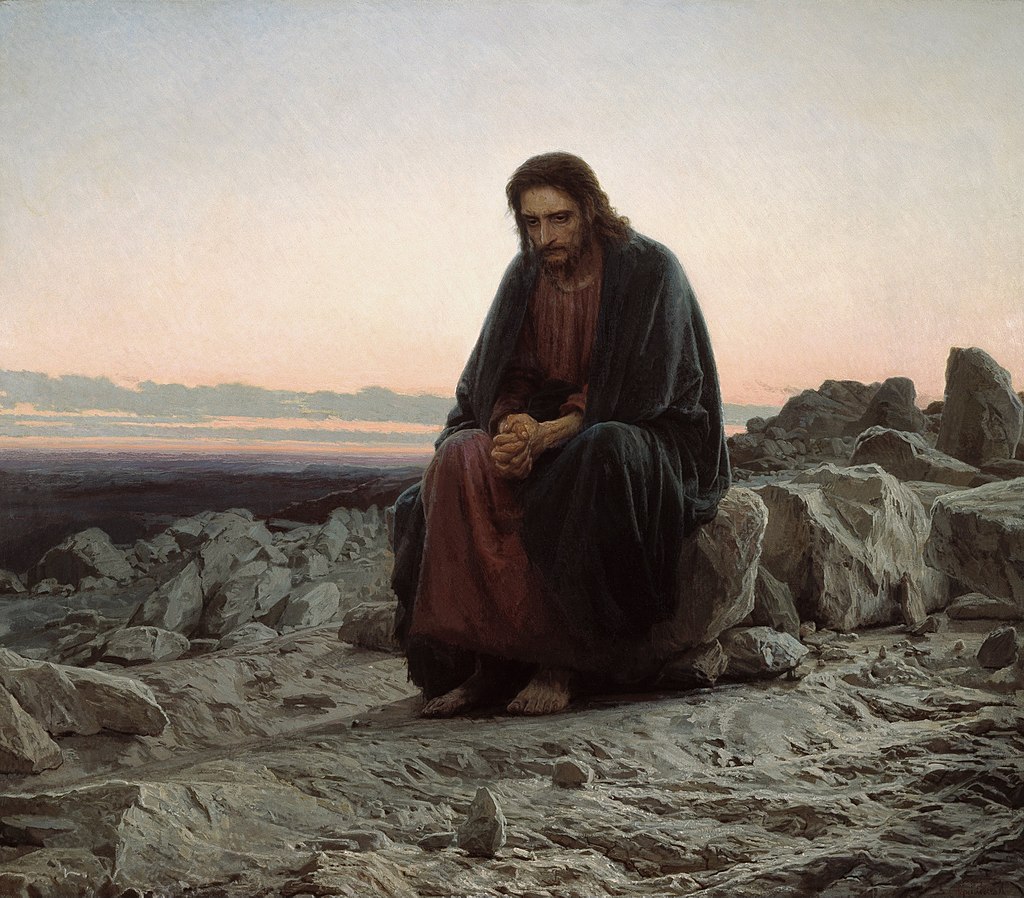
Who or what sustains you when all else seems to fail? What holds you up when you feel so very heart-and-body tired that your very skeleton seems unable to carry you further? What brings the promise of light for you in the midst of great grief? What sits at the very heart of who you are? These are the questions that come with the season of Lent and it’s a shame that for many of us Lent is just some vague interlude between Pancake Day and Easter Day, a season of some sort between one indulgence and another, between pancakes and chocolate eggs! Missing the real point of Lent is to miss the question we don’t get many chances to ask – what really matters to me? What sustains me when I am at my most vulnerable?
Now, I love daffodils and tulips, but especially daffodils. Their appearance at this time of the year, when the weather still seems so dark and wet, really lift the spirit. They are pretty, cheerful, cheap as chips to buy, and easy to grow. And they really liven up a room when cut and placed in a vase. What’s not to love? Well, maybe that they don’t last too long, but that might be down to my own very un-green fingers.
Daffodils always remind me of Wordsworth’s famous poem, ‘Daffodils’. Remember how it begins?
I wandered lonely as a cloud,
That floats on high o’er vales and hills,
When all at once I saw a crowd,
A host, of golden daffodils;
I discovered long ago that the Poet Laureate was exercising a bit of poetic license when he wrote this masterpiece; he was not actually as lonely as the clouds during this walk. He had with him his sister, Dorothy, whom he adored and who often went out and about with him on roaming the Lakes.
But that’s beside the point! The deeper meaning of the poem beyond witnessing to the lovely, feel good presence of the daffs, is revealed in the last, less well-known verse.
When he is alone, when his heart is low and his mood reflective, his memory takes him back to those yellow fields.
Wordsworth had a profound, utterly evangelistic, confidence that nature could restore what had been lost.
That memory of life and light heal him and bring him joy, even when they are not present. So completely is his soul in tune with the natural world.
For oft, when on my couch I lie
In vacant or in pensive mood,
They flash upon that inward eye
Which is the bliss of solitude;
And then my heart with pleasure fills,
And dances with the daffodils.
Wordsworth, born in 1770, was still only eighteen when an earth-shattering revolution began in France. Like Beethoven and Hegel, who came of age round about the same time, he was an enthusiastic advocate of revolutionary change in the early days. But, as time passed, and a people’s longing for justice descended into terror and genocide, Wordsworth became almost the paradigm for youthful radical fervour giving way to cautious and absolute conservativism.
Instead of trusting in political change, which had let him down so bitterly and with so much blood shed, he turned to nature for solutions to mankind’s greatest longings. He found there both healing and salvation for the human species. He believed profoundly in the spiritual connection between people and the natural world and so much of his later work is devoted to this revelation. He remained a life-long Anglican and was never quite a pantheist, but some of his critics felt he came very close. Above all else, he was the poet of the natural world, not in a simpering ‘isn’t it all lovely’ kind of a way, but with a profound, utterly evangelistic, confidence that nature could restore what had been lost. It brought wholeness and, in its way, salvation. Nature was the thing we could not afford to lose, either through political or industrial revolution. It is in this light that we need to read ‘Daffodils’, especially the last verse.
Revolution and great personal loss forced Wordsworth to confront life when lived at its bleakest. And when, politically and personally, all about him seemed to be in the process of being dismantled he found his anchor in the natural world.
Nature is what sustained William Wordsworth. What sustains us when we are vulnerable, lost, bereft? What carries us through and out of the valley of the shadow of death?
We come to Lent and what it can mean for all of us, if we are willing to ask the question. What sustains us? What is left when it feels as if everything has been taken away?
Lent is the season of repentance and renewal that begins the day after Shrove Tuesday and brings us through to Holy Week and Easter, the primary Christian Festival. It recalls the forty days and nights Jesus spent in the wilderness before he began his ministry at the age of thirty. There in the desert as he prepared for what was to come, he was tempted by the devil to bypass hunger, fear and exhaustion and surrender to the very human temptation to take the easy option out of that desert place. He refused. Instead, when Jesus was at his most vulnerable, physically and spiritually, he leaned on what (rather, who) he knew would not let him down, His Father.
Lent is a time to work out what happens when what holds us up or protects us from reality is taken away. During the service on Ash Wednesday we receive the imposition of ashes, when the sign of the Cross is marked in ash on our foreheads. It is a timely reminder of our own mortality and of what we all like to forget – that everything we build up to support us in this world will eventually be taken from us – nothing about our homes, our work, our wealth or our health will in the end survive beyond our allotted course. It’s all so very transient. Is it true that we are so wired to avoid this reality that we cannot even dream of our own death? There’s a message there somewhere!

Also, at this service, we often hear the words from Matthew, a reminder of what we should really ponder – what matters to us in the great scheme of things really and isn’t it unwise to hold closest those things which will not last. Better still, Jesus tells his disciples,
9 “Do not store up for yourselves treasures on earth, where moths and vermin destroy, and where thieves break in and steal. 20 But store up for yourselves treasures in heaven, where moths and vermin do not destroy, and where thieves do not break in and steal. 21 For where your treasure is, there your heart will be also.
Lent is a chance to pause, to go out into the wilderness, metaphorically at least, and work out what matters. It is a time to recalibrate spiritually and put aside, as much as possible, the din of everyday life and to listen carefully. Where is God in my life?
And, if we’re not a believer, we can still ask ‘what really matters to me?’ ‘What is the treasure in my life? ‘Am I nurturing it, or am I letting the din of the modern world with its relentless demands on my time and energy, distract me?’ There will come an answer.
We can’t all wonder through fields of daffodils. And we may or may not believe in the God of Jesus. I do and it sustains me in the way it sustained Jesus in the desert, when I am, like Wordsworth, in ‘pensive mood’. What sustains you? Where do you go when there is nowhere to go? Lent gives you the time and space to work that out. It is as much a gift as any other season.
Matthew 6 NRSVUE – Concerning Almsgiving – “Beware of – Bible Gateway
19 “Do not store up for yourselves treasures on earth, where moth and rust consume and where thieves break in and steal, 20 but store up for yourselves treasures in heaven, where neither moth nor rust[i] consumes and where thieves do not break in and steal. 21 For where your treasure is, there your heart will be also.
The Gospel of Matthew, Chapter 6


Thank you for reading – I look forward to hearing your thoughts!